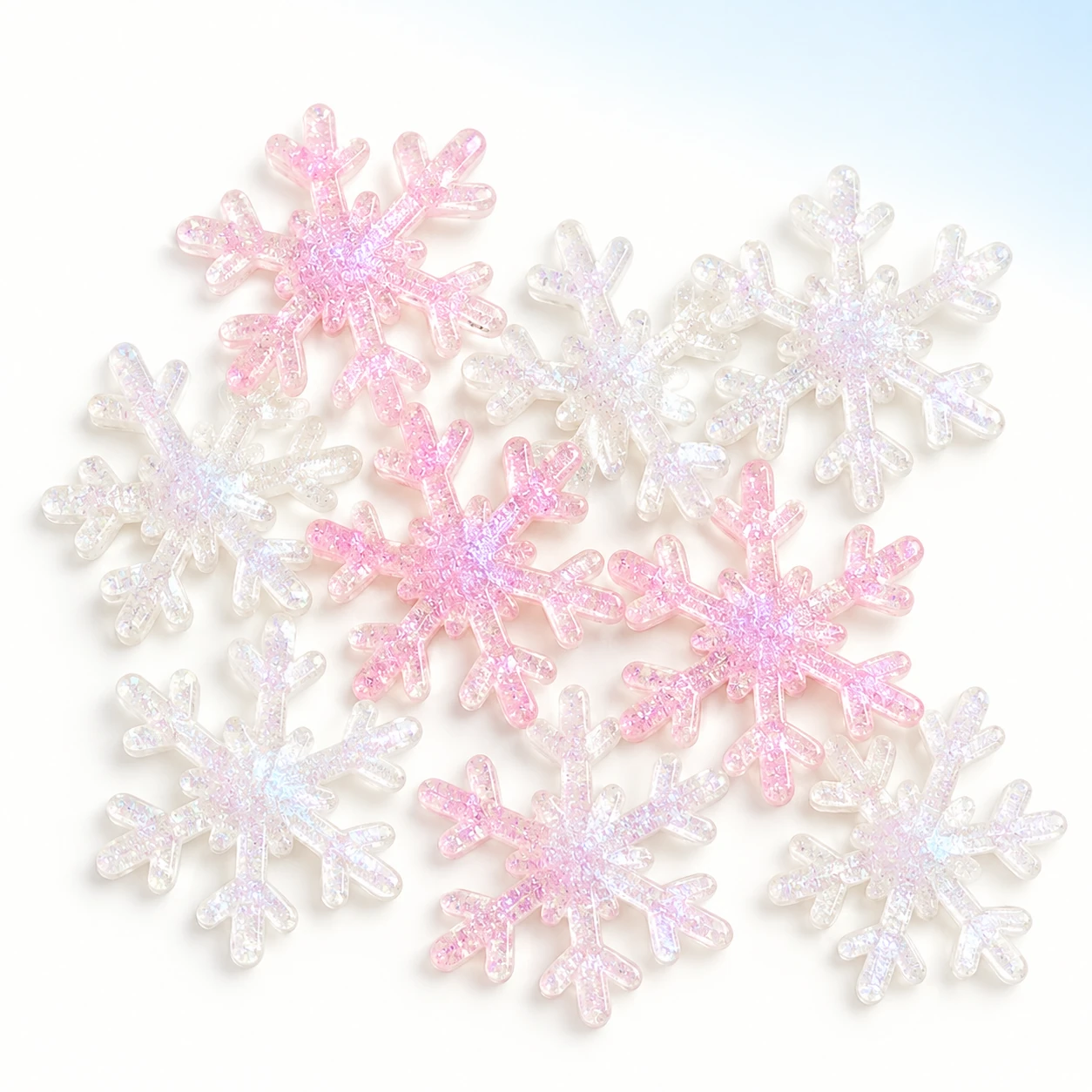
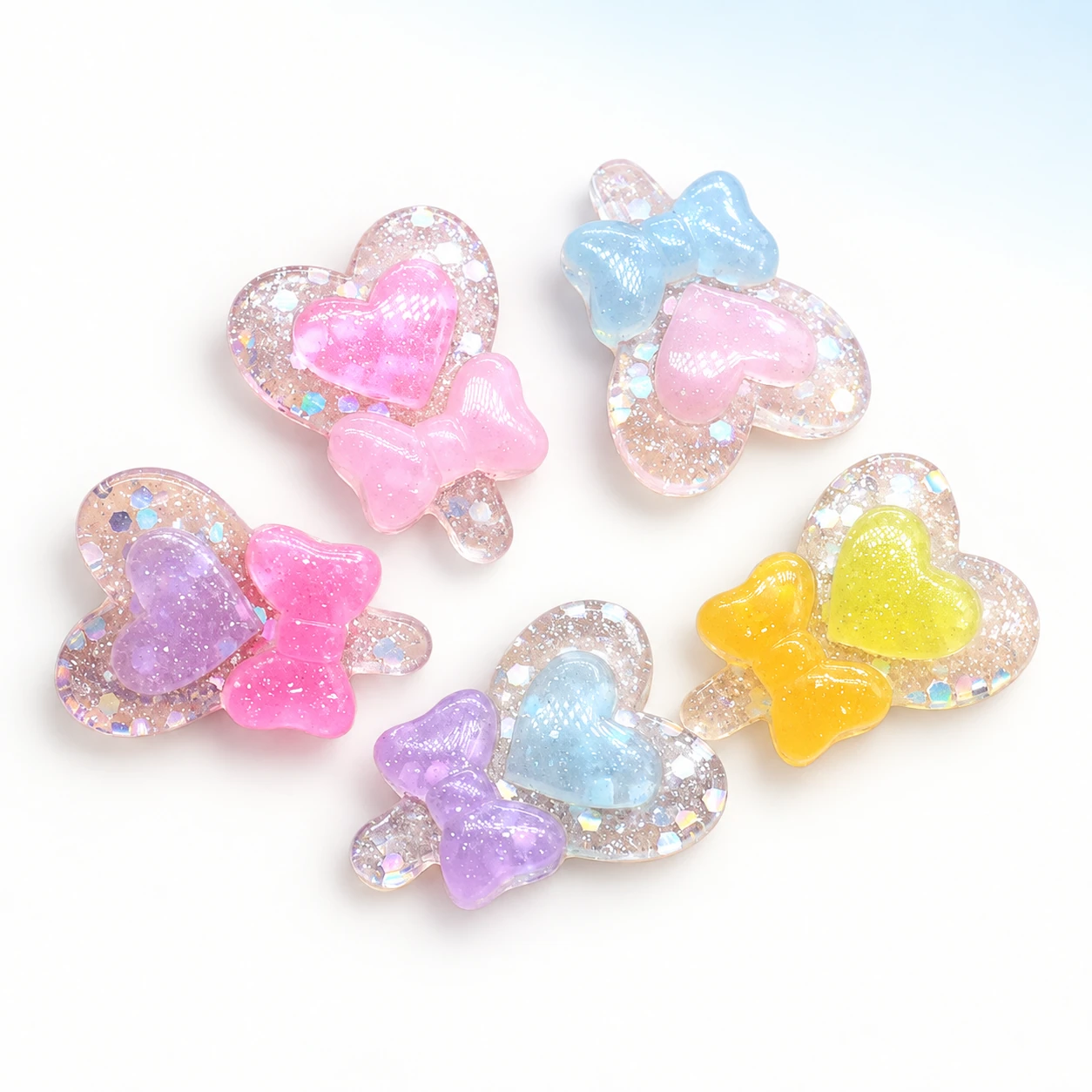
The supplied workflow shows mould preparation, forming and release, surface finishing, sorting and storage. For a custom order, define the component design, size, colour, finish and packaging, then approve a physical sample.
A photo-led look at resin flatback charm production
Resin flatback charms are decorative components with a shaped front and a back intended for the specified application. Buyers also use terms such as resin cabochons or flatback embellishments. Confirm the actual back profile, dimensions and material for each style.
This guide uses photographs supplied by Qula Craft to explain mould preparation, forming, finishing, sorting and storage. They show several designs at different stages, rather than one order moving through every photograph. The exact sequence and finish depend on the design.
1. Prepare the mould and review the shape
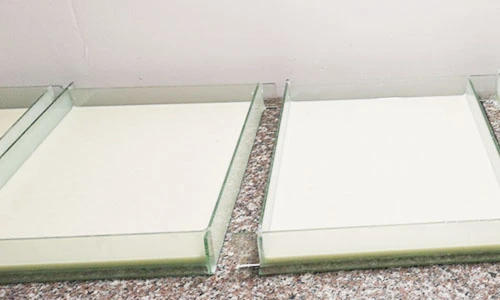
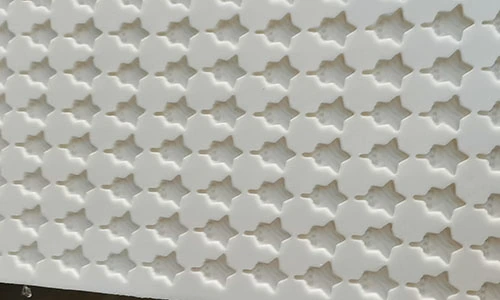
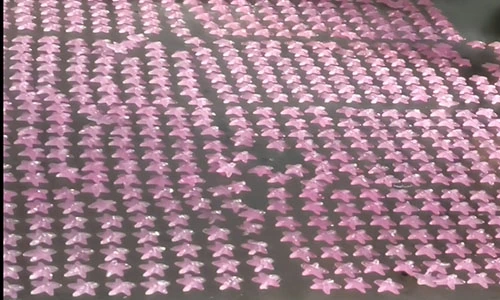
The first photographs show mould preparation frames and repeated star-shaped cavities. The design brief should define the outline, front detail, thickness and back profile before a sample is approved.
For a new OEM shape, send a drawing or reference sample. For ODM development, share the theme and target dimensions. New tooling, sample revisions and design ownership are agreed for the project.
2. Form the components and release them from the mould
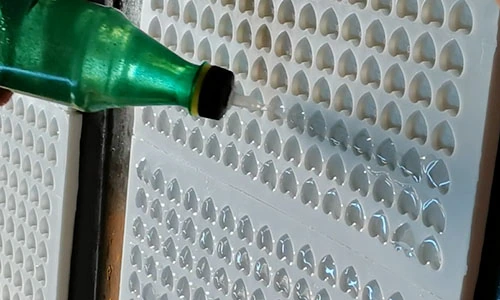
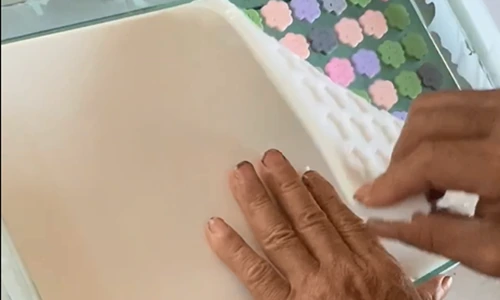
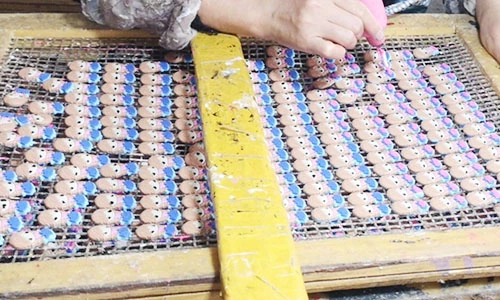
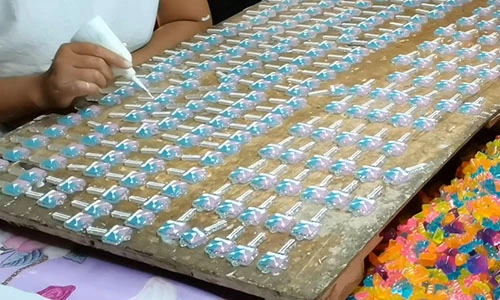
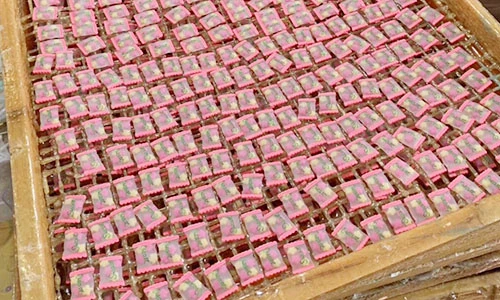
The photographs show liquid being introduced into shaped cavities, rows of formed pink pieces and a flexible mould being peeled back from flower-shaped components.
For purchasing, approve the colour, dimensions, shape definition and back surface against a physical sample. A photograph does not establish the resin formulation, curing conditions or finished-product safety.
3. Finish the surface and add decorative detail
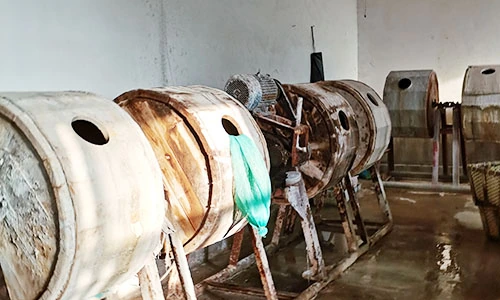
The supplied workflow includes drum finishing equipment, hand-applied details and pieces arranged on finishing racks. The finishing route varies by component: a solid-colour piece and a painted design may need different operations.
Specify the finish you want, such as matte, glossy or painted details, and confirm the approved sample. Coating chemistry, cure settings and colour durability cannot be established from these photographs alone.
4. Sort the pieces and build the assortment
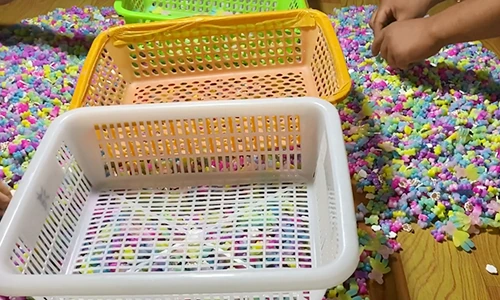
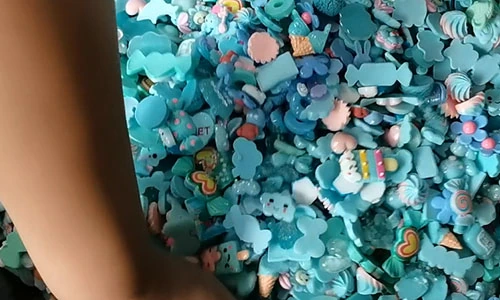
Sorting separates components by design, colour and appearance before they are combined into an assortment. The photographs show multicoloured pieces being handled beside baskets and a separate blue-themed collection.
For a custom filler mix, define the component list and mixing ratio by weight or count. Tell us which focal pieces must be included and whether substitutions are permitted. Agree appearance and dimensional acceptance points before the bulk order.
5. Agree packaging and organise the finished stock
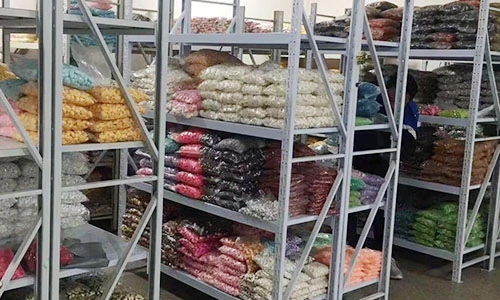
The warehouse photograph shows bagged components stored by style and colour. Storage photographs demonstrate handling arrangements; they do not guarantee a particular SKU is currently in stock.
Qula Craft accepts bulk packing, custom retail formats and logo-label projects. Specify the pack quantity, artwork and label language. Logos on the product itself require a review of the material, size and available surface.
What to send for a custom resin charm quotation
Qula Craft welcomes OEM/ODM and wholesale enquiries from Europe, the United States, Australia, South America and other markets. Describe the product you want to launch and the market where it will be sold.
- Design: reference SKU, sketch or artwork; dimensions in millimetres; colours and finish.
- Order: estimated quantity, whether measured by weight or piece count, and your required timing.
- Packaging: bulk or retail format, pack weight or count, label language and logo artwork.
- Application: slime decoration, a craft kit, decoden, shaker or another finished project, plus the intended age group.
- Destination: country and delivery location, with any product documentation requested by your buyer.
For Brazil or other South American destinations, include the required Portuguese or Spanish label text in the packaging brief. The final wording and destination requirements should be confirmed before printing.
Use our custom enquiry form or read the OEM/ODM service overview. Sending a brief starts a quotation discussion; it does not place an order.
Approve the sample for your actual application
For slime brands, assess the component in the actual slime base. For glued decorations, check the adhesive and contact surface. For resin casting or liquid-filled projects, review compatibility with the specific system before approving bulk supply.
These production photographs are not product test reports. Factory audits and management-system documents have their own stated scope and do not certify every component or production operation. Read our sample process and documentation guide when preparing your sourcing review.
Questions buyers ask
Can Qula Craft make a custom resin charm shape?
Yes. Send a sketch, artwork or sample together with the target dimensions. Tooling, material suitability, development costs and sample requirements are reviewed for the project.
Can you add our logo and custom packaging?
We accept logo and packaging requests. Product-level branding depends on the material, size and available surface; custom labels and printed packaging are reviewed separately.
Does every design use all the photographed steps?
No. These photographs show several designs and stages. The production and finishing route is specified for the component being ordered.
What is the wholesale minimum order quantity?
MOQ depends on the component, custom development and packaging format. Send your estimated quantity for a specification-based quotation.
Discuss your custom project
Send your references, quantity, intended use, packing brief and destination. We will use those details to discuss a sample and quotation.